Skip to content
  • Family-run since 2008
  • Rated Excellent 4.8★
  • Timeless Design
  • Natural Materials

Cart

Your cart is empty

How to style

How to Style a Console Table

Learn how to style a console table with practical guidance on artwork, mirrors, lamp height, object groupings, clear space and useful storage underneath.


Reclaimed wood console table styled with a lamp, artwork and decorative objects in a warm neutral interior

A console table often has to do several jobs at once. In a hallway it creates a sense of arrival and offers somewhere to place keys or post; in a living room it can fill an empty wall, hold a lamp and bring together artwork, storage and decorative pieces. The challenge is giving it enough presence without making a narrow surface feel crowded.

Start with the space around the console before styling the surface. In a frequently used hallway, approximately 90 cm of clear passage is a useful target where the room allows. Then build the arrangement in three layers: one wall anchor, one tall object and a smaller supporting group. Leave roughly a quarter to a third of the tabletop visually clear. These proportions are flexible styling guides rather than fixed rules, but they create a calm framework that can be adapted to the size and function of the room.

01 · Start with the setting

Give the console enough room to breathe

Before styling the surface, check that the console suits the wall and leaves the room comfortable to use. In a hallway, a slim table approximately 30–40 cm deep is often easier to live with than a deeper piece. Aim for around 90 cm of clear passage where the layout allows, measured from the front of the console to the opposite wall or furniture. On a broad wall, the table should feel intentionally placed rather than floating: centre it within the available section of wall, doorway or architectural feature rather than automatically centring it within the whole room. If the console sits behind a sofa, keep it close to the sofa’s height or slightly lower so the two pieces read as one composition.

Explore Console Tables
A console should connect the wall, surface and floor rather than styling each area separately.
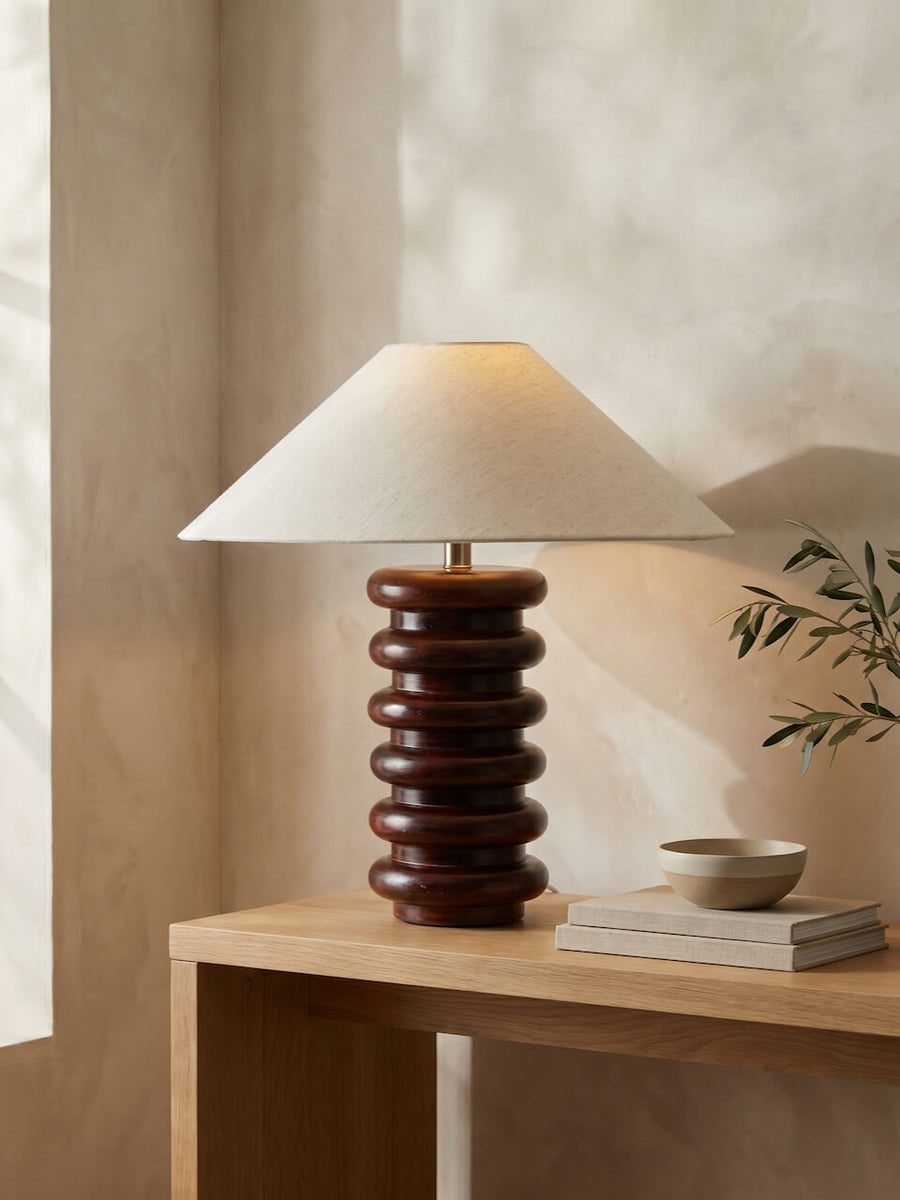
Table lamp with a wooden base and white shade on a wooden table.
Vase with white tulips on a wooden surface in a room with a mirror and books.

02 · Anchor the wall

Begin with artwork or a mirror

A mirror or artwork gives the arrangement a visual centre and prevents the objects on the console from appearing disconnected. As a starting point, choose a wall piece around two-thirds to three-quarters of the console’s width. Position its lower edge approximately 15–25 cm above the tabletop; the exact gap depends on the frame, ceiling height and objects below it. A mirror is useful in a hallway because it reflects light and offers a practical final check before leaving the house. Artwork can introduce colour or a stronger focal point. If using several frames, treat the complete group as one shape and keep the outer width related to the console. Avoid hanging a small picture too high—the wall piece and surface arrangement should overlap visually, even though they do not physically touch.

Explore wall art
Table lamp with a wooden base and white shade on a wooden table.

03 · Create height

Let one tall piece lead the arrangement

Choose one principal vertical element—usually a lamp, vase or generous branch—and let the remaining objects step down in height. A table lamp around 50–70 cm tall will often have enough presence on a full-size console, although the right scale depends on the table and wall anchor. Position the lamp toward one end rather than exactly in the centre, then balance it with a group of two or three lower objects on the opposite side. Vary both height and shape: for example, combine a rounded vase, a horizontal stack of books and a small bowl. The two sides do not need to match in weight or number; they need to feel visually balanced. Keep the lamp clear of curtains and ensure cables do not cross a walkway.

Explore Table Lamps

04 · Use the space below

Add useful storage without filling every gap

The space beneath a console can hold baskets, stools or an ottoman, but it should not become a solid wall of storage. One substantial basket or a balanced pair will usually feel calmer than several unrelated containers. Leave approximately 5–10 cm of breathing room around the baskets where possible, including a visible gap below the underside of the table, so they look intentionally placed rather than wedged in. Choose baskets that are no deeper than the console and keep handles out of the walkway. In an entrance hall, use them for shoes, scarves or dog-walking essentials; in a living room, they can hold throws or children’s toys. If the console already has shelves or drawers, leave part of the floor area empty—the negative space helps the furniture retain its lighter silhouette.

Explore storage baskets

The edit

Pieces for the look